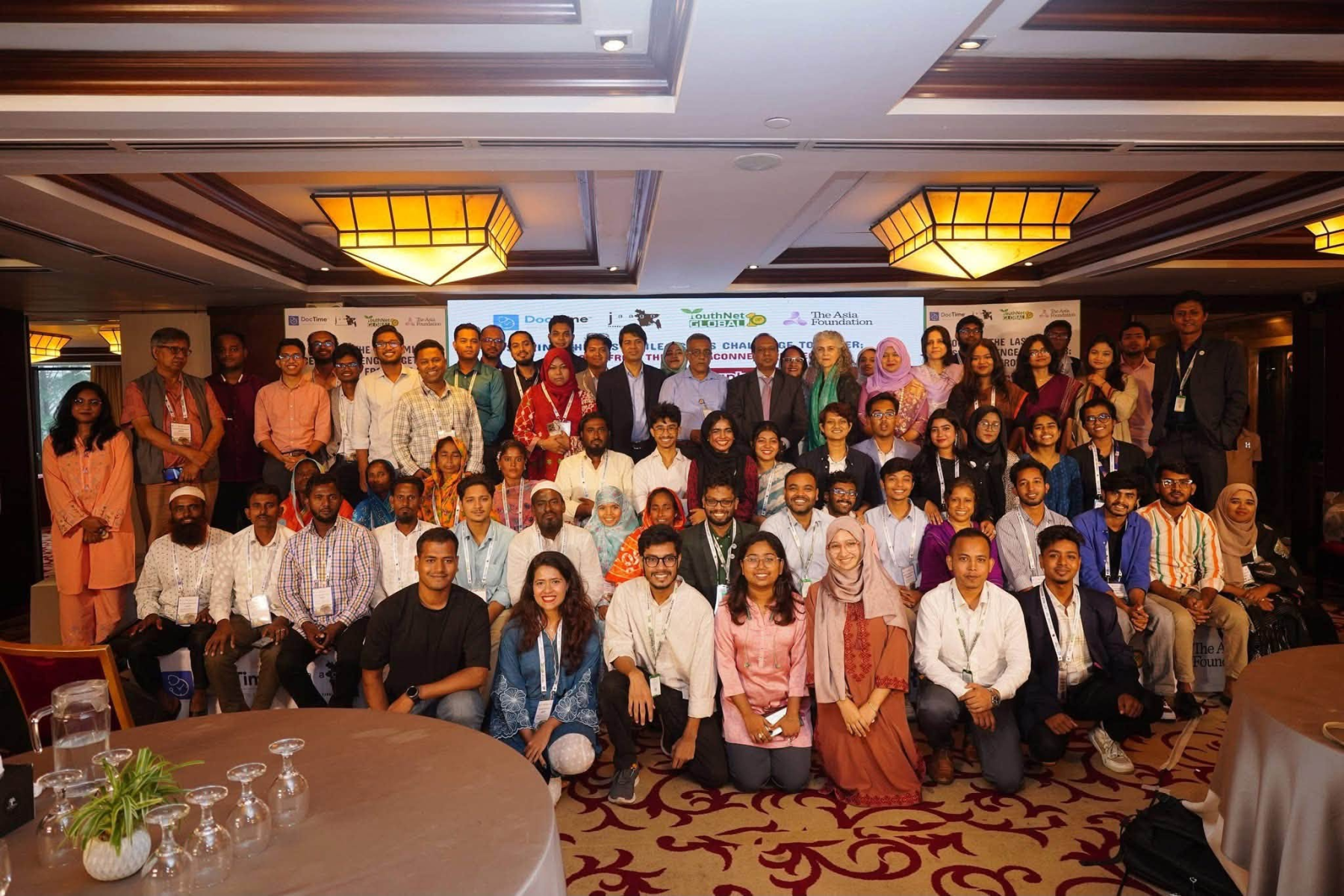
Speakers called for a comprehensive, long-term programme to support Bangladesh’s Manta fisherfolk community. At a learning event in Dhaka on Wednesday, they urged the government and development partners to work with community members to improve access to education, healthcare, financial services and public support, and to advance the community’s sustainable development.
Many Manta families live on traditional wooden boats along rivers in southern Bangladesh. River erosion, natural disasters and environmental pollution have deepened their vulnerability and threatened their livelihoods and cultural traditions. Without a permanent land address, some families face barriers to obtaining National Identity (NID) cards, registering births, enrolling children in school and accessing government social safety-net programmes.
The event, titled “Solving the Last-Mile Access Challenge Together: Lessons from the MantaConnect Project,” was held at the Greesho Ballroom of Six Seasons Hotel. YouthNet Global organised it with support from The Asia Foundation.
MantaConnect is implemented by YouthNet Global, JAAGO Foundation Trust and DocTime. It uses technology-enabled approaches to improve Manta fisherfolk’s access to healthcare, education and financial services. The programme included a panel discussion, a documentary, a presentation of a learning document, community songs and informal exchanges.
Community flags service discrimination and declining fish stocks
Community members raised concerns about discrimination when accessing services and declining fish stocks, which they linked to large-scale trawling. They also said some families struggle during the government-imposed 22-day fishing ban and are left out of rice allocation programmes meant to support fishing communities during the restriction period. Jasim Sarder, a Manta community leader from Laharhat in Barishal, made an emotional appeal for continued support.
“Why would you bring us into the light and then leave us in darkness?” he said. “Please do not leave us; we want to remain in the light throughout our lives.”
He called for fair access to fisher identification cards and ration cards, and thanked those who helped secure land for a community graveyard. He also pointed to financial literacy, digital healthcare and education as areas needing continued attention.
Project supports birth registration for 200 children, trains 200 members
Sohanur Rahman, Executive Coordinator of YouthNet Global, said the MantaConnect project had supported birth registration for 200 children, trained 200 community members and engaged 30 local youth volunteers. Financial literacy training reached 150 people, 60 per cent of them women.
He described the process as a “digital transition” but noted that barriers involving identity documents, sanitation, education and financial access persist.
Iftekharul Karim of JAAGO Foundation Trust reported average attendance of 98 per cent and no dropouts among children in the project’s education activities.
Tanvir Rashed of DocTime said more than 250 patients had been served. He identified medicine assistance, affordable diagnostic tests and regular follow-up as areas needing further support.
Kashfia Zaman, Program Associate at The Asia Foundation’s Bangladesh Country Office, outlined the project’s work in remote education, telemedicine, digital literacy, mobile finance, local governance and community mobilisation. She said community members were eager to learn, though foundational skills still needed strengthening.


Panelists call for census and alternative livelihoods
A panel moderated by Sohanur Rahman included Dr Ahmed Abid of North South University; Dr Tangina Sharmin, Chief Medical Officer of DocTime Limited; Halima Begum of the Ministry of Women and Children Affairs’ One-Stop Crisis Centre; and Nadira Rahman, Chairman of Tungibaria Union Parishad.
Speakers said continued collaboration and community..... See More--- UNB News